|
|
|
|
데이터를 도서쇼핑몰 웹사이트로부터 검색하여 가져오고 있는중입니다....
사이트의 속도에 따라 조금 느려질 수 있습니다.
★검색된 정보는 구매시점에서 변경될 수 있으니 구매전 해당쇼핑몰에서 확인바랍니다★ |
|
|
Major Symbols.
Standard Abbreviations.
Introduction and Overview of Electrode Processes.
Potentials and Thermodynamics of Cells.
Kinetics of Electrode Reactions.
Mass Transfer by Migration and Diffusion.
Basic Potential Step Methods.
Potential Sweep Methods.
Polarography and Pulse Voltammetry.
Controlled-Current Techniques.
Method Involving Forced Convention--Hydrodynamic Methods.
Techniques Based on Concepts of Impedance.
Bulk Electrolysis Methods.
Electrode Reactions with Coupled Homogeneous Chemical Reactions.
Double-Layer Structure and Adsorption.
Electroactive Layers and Modified Electrodes.
Electrochemical Instrumentation.
Scanning Probe Techniques.
Spectroelectrochemistry and Other Coupled Characterization Methods.
Photoelectrochemistry and Electrogenerated Chemiluminescence.
Appendix A: Mathematical Methods.
Appendix B: Digital Simulations of Electrochemical Problems.
Appendix C: Reference Tables.
Index. |
| 출처 : 알라딘 |
|
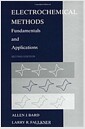
This edition is fully revised to reflect the current state off the field.<br> * Significant additions include ultramicroelectrodes, modified electrodes, and scanning probe methods.<br> * Many chapters have been modified and improved, including electrode kinetics, voltammetric methods, and mechanisms of coupled chemical reactions.This textbook for a senior undergraduate or beginning graduate course introduces the fundamentals of electrochemical methods now in widespread use. The second edition adds coverage of phenomena at well-defined surfaces, modified electrodes, scanning probe methods, LCEC, impedance spectrometry, and applications of ultramicrolectrodes. Annotation c. Book News, Inc., Portland, OR (booknews.com) |
| 출처 : 알라딘 |
|
|
|
|